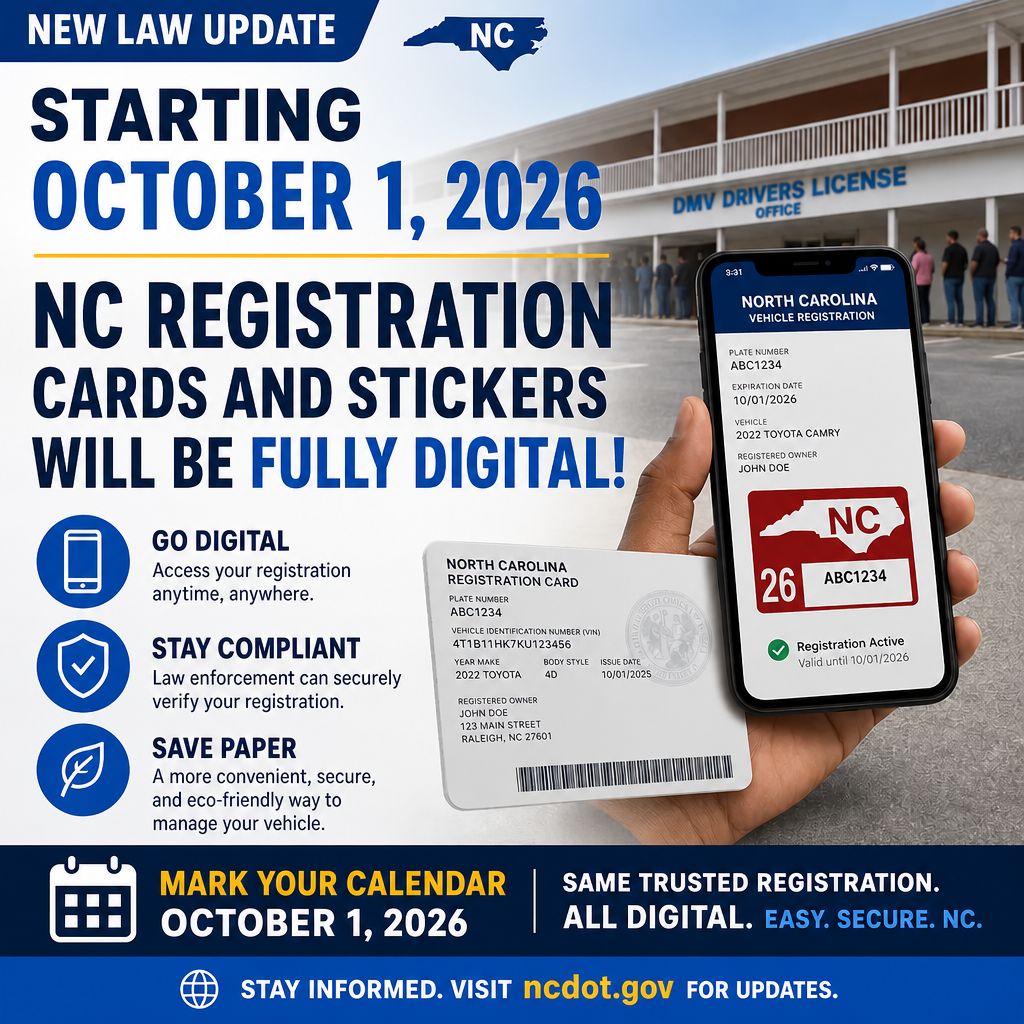
Beginning October 1, 2026, the North Carolina Division of Motor Vehicles will transition to an electronic vehicle registration system. The DMV will no longer routinely issue paper registration cards or annual registration renewal stickers. Drivers must still renew their vehicle registrations each year and pay all required fees, but law enforcement will be able to verify registration status electronically.
Vehicle owners will receive an electronic notice of registration and may print their registration information at home. An owner who wants a printed copy from the North Carolina DMV may request one in person or through the DMV online portal and pay a fee limited to the actual cost of printing and mailing.
The change was enacted as part of Session Law 2026-41, Senate Bill 257. Section 43.10 of the law directs the North Carolina DMV to establish a secure electronic vehicle registration system.
The General Assembly stated that the purpose of the change is to reduce administrative costs, streamline the vehicle registration process, and improve efficiency.
Beginning October 1, 2026:
Yes.
Although registration cards and renewal stickers are going away, the legal requirement to maintain a current vehicle registration has not changed.
North Carolina drivers must still renew their registration each year, pay the required fees, and satisfy any applicable vehicle inspection requirements. The law changes how the registration is documented and verified. It does not eliminate the obligation to keep the registration current.
The electronic notice of registration will identify the period for which the registration is valid. Under the amended law, a driver may continue operating the vehicle until midnight on the fifteenth day of the month following the month in which the registration expired.
Session Law 2026-41 does not create a new penalty for failing to maintain a valid registration. Instead, it updates existing North Carolina laws to account for electronic registration records and notices.
Under North Carolina General Statute Section 20-111, it remains unlawful to willfully display an expired registration plate while knowing that it is expired. That offense is classified as a Class 3 misdemeanor.
Drivers should not assume that eliminating registration stickers makes expired registration more difficult to enforce. Law enforcement will be able to check the electronic registration record associated with the vehicle.
From a personal injury standpoint, the other driver's expired or invalid registration generally does not determine whether that driver is legally responsible for causing a collision. Liability ordinarily depends on how the accident occurred and whether a driver's negligence caused the injuries and damages.
However, a driver who has failed to maintain a valid vehicle registration may also have allowed automobile insurance coverage to lapse. Registration status and insurance status are separate legal issues, and an expired registration does not necessarily mean that the vehicle is uninsured. Nevertheless, insurance coverage should be investigated promptly after a collision.
If the at fault driver does not have valid automobile liability insurance, the injured person may need to pursue a claim through uninsured motorist coverage under an applicable automobile insurance policy. Available coverage can depend on the injured person's policy, household policies, the vehicle involved, and the specific circumstances of the accident.
The transition to electronic registration should make the renewal process more convenient and reduce the amount of paperwork mailed by the North Carolina DMV. Beginning October 1, 2026, drivers should no longer expect to receive a paper registration card and renewal sticker through the ordinary registration process.
Drivers should continue to renew on time and retain access to the electronic notice of registration. Although carrying a paper registration card will no longer be required, some drivers may still prefer to print a copy for their personal records or keep one in the vehicle.
As a North Carolina attorney, I routinely monitor changes to our state's motor vehicle laws because they can affect drivers and accident victims. Although this new law is primarily an administrative change, understanding the new process can help drivers avoid confusion and maintain proper registration.
If you have been injured in a North Carolina car accident and have questions about liability or available insurance coverage, Galbavy Law offers free consultations.
This article is provided for general informational purposes and is not legal advice. The law and administrative procedures may change, and the North Carolina DMV may issue additional guidance before implementation.

Quick Answer North Carolina requires drivers to maintain automobile liability insurance with minimum limits of...
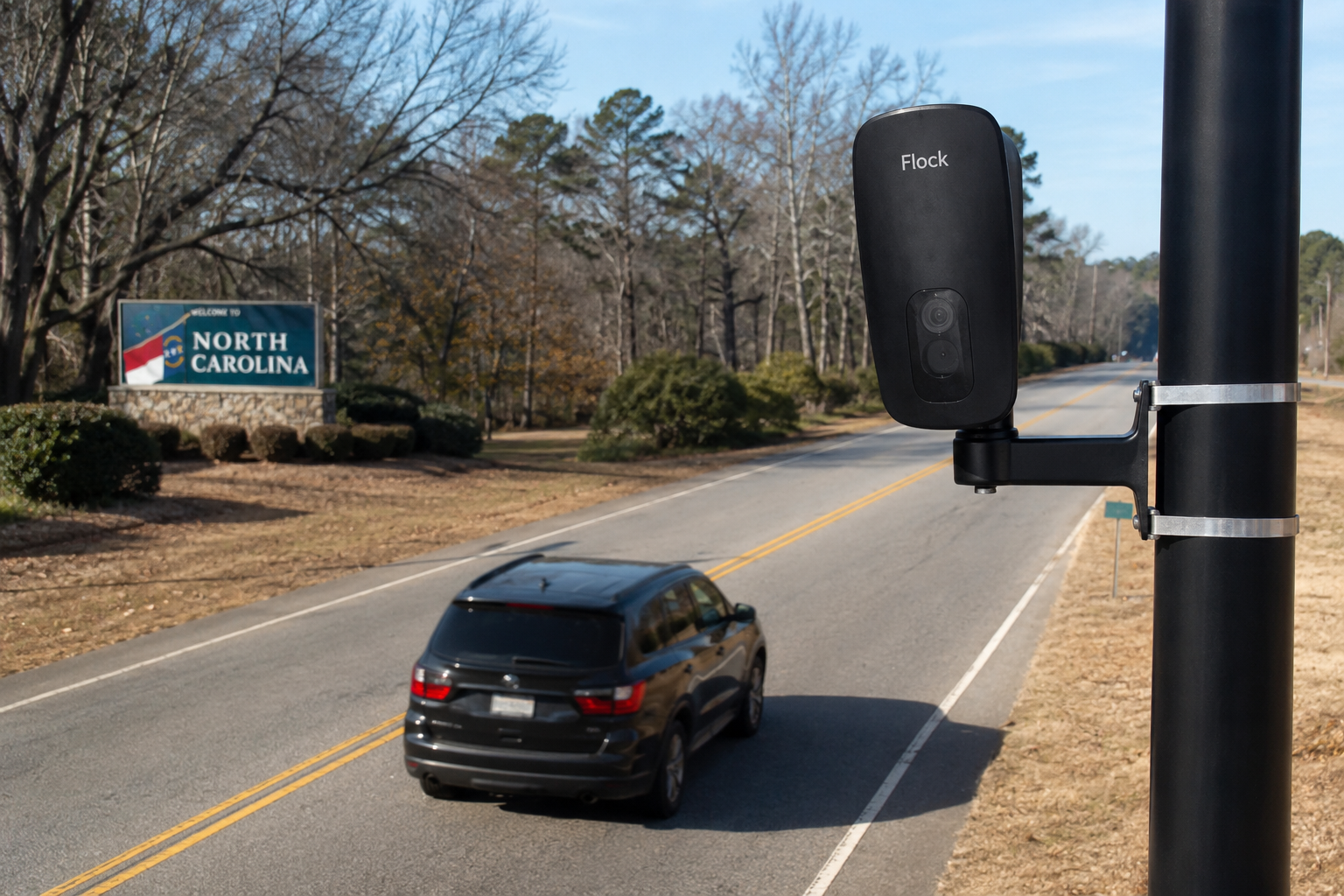
Quick Answer: Flock cameras and other automatic license plate readers are legal in North Carolina,...

1 Prior results do not guarantee similar outcomes in future cases because each case is unique and must be evaluated separately. The only way we can assist you is for you to call us about your case.
Protected by reCAPTCHA. Google Privacy Policy and Terms of Service apply.