A drunk driving accident stands apart from other types of collisions due to the impairment's influence on various facets of the event, including how the crash unfolds, the types of injuries incurred, and the determination of liability under North Carolina law. In the state, impaired driving is treated seriously and classified as a criminal offense, as outlined in § 20-138.1.
In Gastonia, DUI-related crashes often happen late at night or on weekends on roads like I-85, US-74, and Franklin Boulevard, where impaired drivers fail to react, drift across lanes, or misjudge speed with devastating results.
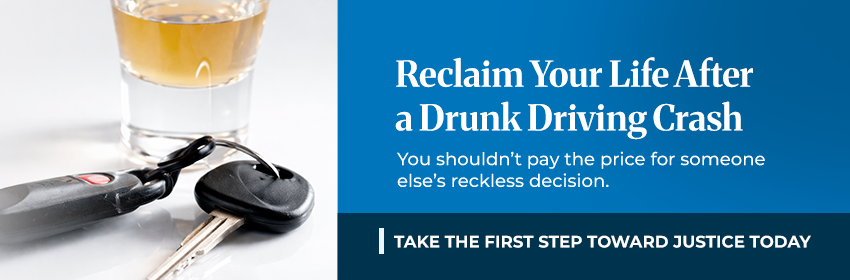
When alcohol or drugs are involved, families are often told the criminal case will “take care of it.” That assumption causes problems.
Criminal charges focus on punishment, not compensation, and insurance companies still look for ways to limit what they pay, even when a driver was clearly impaired.
Victims can end up facing medical bills, missed work, and long recoveries while insurers argue behind the scenes.
Galbavy Law works with people in Gastonia and surrounding areas who were injured by drunk drivers, focusing on accountability, clear evidence, and building cases that insurers cannot brush aside.
Responsibility for a drunk driving crash may extend beyond the impaired driver. Depending on how the collision happened and where the alcohol came from, liability can also involve employers, vehicle owners, or alcohol providers under North Carolina law.
In most cases, the impaired driver is the primary responsible party. Driving under the influence shows an apparent failure to operate a vehicle safely, especially on high-traffic Gastonia roads like I-85 or US-74.
In some situations, responsibility does not stop with the driver. If the impaired driver was working at the time or driving a vehicle owned by someone else, additional parties may share responsibility.
North Carolina law may allow claims against businesses that overserve alcohol. These cases depend on timing, proof of service, and whether the provider ignored clear signs of intoxication.
A bar or restaurant may be held responsible if it served alcohol to a visibly intoxicated person who later caused a crash. These cases require careful investigation and are separate from the criminal DUI charge.
Drunk driving accidents often cause serious injuries because crashes tend to happen at higher speeds and without meaningful attempts to avoid impact. In Gastonia, these collisions frequently result in injuries that require extended medical treatment and long-term recovery.
Traumatic brain injuries are common when occupants are struck with significant force or experience violent movement inside the vehicle. These injuries can affect memory, concentration, and daily function long after the crash.
Damage to the neck or spine can limit mobility and cause ongoing pain. Some injuries improve with treatment, while others lead to permanent restrictions.
High-impact collisions often result in broken bones or internal injuries that require surgery or hospitalization.
People outside the driver’s seat often face greater risk because they have less protection and little warning before impact. These injuries are usually more severe, and recovery can take longer.
Alcohol impairment increases crash severity by delaying braking, reducing awareness, and preventing evasive action. In Gastonia, crashes involving impaired drivers, this often lead to higher-speed impacts and little effort to avoid collision, which raises the risk of catastrophic injury.
Impairment slows reaction time, which means drivers brake later or fail to steer away from danger. Even a short delay can turn a near miss into a full-force impact, especially on busy roads where traffic moves quickly.
Alcohol affects a driver’s ability to judge speed and distance. On roads like I-85 or US-74, this often results in drivers traveling faster than intended or misjudging gaps, increasing the force of a collision when a crash occurs.
Impaired drivers are less likely to anticipate hazards or adjust to changing conditions. Without defensive driving responses, collisions tend to happen head-on or at full speed, leaving occupants and pedestrians with little protection.
Drunk driving crashes in Gastonia often happen when drivers misjudge speed, drift out of lanes, or fail to react in time. These wrecks are common on late-night routes like I-85, US-74, and Franklin Boulevard, where impaired driving turns routine traffic situations into serious collisions.
Impairment affects decision-making and response speed. Drivers may underestimate how fast they are traveling or overestimate their ability to handle traffic conditions, especially on higher-speed roads.
Many drunk driving crashes involve basic driving failures. These errors often happen without warning to other drivers.
Drunk driving crashes are more common during evenings, late nights, and weekends, when traffic is lighter, but speeds are higher. Reduced visibility and fewer witnesses can make these crashes especially dangerous.
Yes, impairment still matters in a crash even if alcohol levels are below the legal limit. A driver can be considered impaired if their ability to operate the vehicle safely is affected, regardless of their blood alcohol concentration. This impairment can still contribute to the crash.
A DUI charge can support a civil injury case, but it does not control it. In Gastonia, criminal DUI cases and civil injury claims move on separate tracks. The criminal case focuses on punishment, while the civil case focuses on financial responsibility for the harm caused.
One of the most significant differences between the two cases is the level of proof required. Criminal cases require proof beyond a reasonable doubt, which is a high standard.
Civil injury cases use a lower standard, meaning responsibility can still be established even if the criminal case does not result in a conviction.
Because of this difference, civil cases often succeed even when criminal cases stall or are dismissed.
Criminal DUI cases often take months or longer to resolve, especially if there are hearings, continuances, or plea negotiations. Civil injury cases do not have to wait for that process to finish before moving forward.
In Gaston County, moving early often helps protect evidence and clarify insurance positions before they harden.
No, you do not have to wait for the criminal DUI case to end before filing a civil injury claim in North Carolina. You can proceed with the civil claim even if the criminal case is still pending or unresolved. Waiting for the criminal case to conclude may delay your recovery and could limit your available options.
A drunk driving accident differs from a regular car accident because impairment evidence changes how fault, damages, and negotiations are handled. While liability is often clearer, insurance companies frequently push back harder in these cases, especially when potential damages are higher.
In many drunk driving cases, fault is more direct because impairment plays a central role in causing the crash. This contrasts with regular accidents, where responsibility is often disputed between drivers.
Drunk driving cases rely on additional forms of evidence beyond standard crash documentation.
Insurance companies tend to take a more defensive stance in drunk driving cases due to the higher risk of payouts.
Because injuries are often more severe, potential damages are higher in drunk driving cases than in typical crashes.
Drunk driving accident cases succeed when impairment and causation are clearly documented. Our process focuses on preserving evidence early, confirming intoxication, and showing how impairment directly caused the crash and the resulting injuries.
The process begins with securing evidence before it disappears. In Gastonia, crash scenes on roads like I-85 or US-74 can change quickly, and vehicles are often repaired or destroyed. Preserving photos, video footage, damage patterns, and roadway conditions helps establish how the collision occurred.
Next, we review records tied to impairment. This includes breath or blood test results, arrest timelines, and officer observations made at the scene. These records help confirm whether intoxication was present and establish when impairment occurred relative to the crash.
Statements from law enforcement and witnesses often explain what happened before and after the impact. These accounts may describe erratic driving, delayed reactions, or signs of impairment, helping connect intoxication to unsafe driving behavior.
Impairment alone is not enough. This step focuses on proving that intoxication caused the crash. We analyze speed, braking, lane position, and reaction time to show how impaired judgment or delayed responses led directly to the collision.
A strong case also shows the full impact of the crash. Medical records, treatment plans, lost income, and long-term limitations are documented to explain how the injuries affect daily life and future needs.
Finally, the case is prepared as if it will go to court. Evidence is organized, defenses are anticipated, and pressure is applied to insurers to prevent them from minimizing the harm caused by drunk driving.
Drunk driving cases demand a more aggressive legal approach because impairment evidence creates clear accountability.
Galbavy Law prepares these cases for trial early to prevent insurers from minimizing the seriousness of impaired driving and to keep pressure on from the start.
Even when impairment is obvious, insurance companies often try to limit payouts. They may acknowledge fault while still disputing the severity of injuries or the long-term impact on the injured person.
DUI-related evidence does not stop insurers from pushing back. In many cases, carriers separate intoxication from causation in an attempt to reduce their exposure.
Preparing the case as if it will go to court changes how insurers respond. A trial-ready posture signals that the claim will not be rushed or discounted.
This approach keeps the focus where it belongs, on accountability and the full consequences of impaired driving.

Even when a driver is impaired, insurance companies often fight drunk driving injury claims. In Gastonia cases, insurers may downplay injuries, dispute causation, or attempt to limit damages despite the presence of DUI-related evidence.
Insurers often acknowledge that a driver was impaired but still argue that intoxication did not cause the crash. This tactic shifts the focus away from impaired driving and onto technical details.
Early settlement offers are common in drunk driving cases. These offers often come before the full extent of injuries or long-term effects is known.
Even serious injuries can be challenged. Insurance companies frequently question the necessity or duration of medical care.
Understanding these tactics helps explain why strong preparation and early legal pressure matter, even when fault appears obvious.
Compensation after a drunk driving accident is meant to address both the financial impact of the crash and the personal consequences that follow. In Gastonia cases, recovery focuses on how the injuries affect medical needs, income, and everyday life, not just the collision itself.
Medical costs are often immediate and ongoing after a serious crash. Compensation may cover treatment already received as well as care that will be needed in the future.
Many injured people are unable to work during recovery, and some cannot return to the same type of employment. Compensation can reflect both short-term and long-term income loss.
Drunk driving accidents often disrupt daily routines and independence. These damages recognize how injuries affect quality of life, not just finances.
Because drunk driving involves reckless behavior, some cases allow for additional damages that reflect the seriousness of the conduct.
No two cases are the same. The value of compensation depends on the severity of injuries, how long recovery takes, and what insurance coverage is available. Building a strong claim means documenting losses carefully and avoiding quick assumptions about value.
This approach helps ensure compensation reflects the full impact of the crash, not just the immediate aftermath.
Most drunk driving injury claims must be filed within three years of the crash date. Waiting too long can limit recovery options, even if the impaired driver was clearly at fault.
A DUI arrest helps establish impairment, but civil responsibility still requires showing that the impairment caused the crash. Civil cases focus on evidence, not just criminal charges.
A conviction is not required to pursue a civil injury case. Civil claims use a lower burden of proof and can move forward even if the criminal case is dismissed or reduced.
In some cases, yes. Punitive damages may apply when a driver’s conduct shows reckless disregard for safety, such as driving while impaired.
Other coverage may still apply, including uninsured motorist coverage or policies connected to a vehicle owner or employer. Each case requires a coverage review.
Yes, passengers can pursue claims against an impaired driver, even if they knew the driver had been drinking. Fault is based on driving behavior, not passenger decisions.
Drug impairment can support a civil injury claim just like alcohol impairment. Prescription drugs, illegal substances, or a combination can all be relevant.
Some cases resolve in months, while others take longer, depending on injuries, insurance disputes, and whether litigation is required. DUI cases often involve extended negotiations.
Many cases settle, but some require court action when insurers refuse fair resolution. Trial preparation often influences whether a settlement is possible.
No, to speak with a drunk driving accident lawyer, you do not need to pay anything upfront. At Galbavy Law, our team offers free consultations, allowing injured people to get answers about their options without upfront cost or obligation.
If you were injured by a drunk driver, the next step is protecting your right to compensation. Speaking with a local attorney can help preserve critical evidence, clarify who is responsible, and prevent insurance companies from minimizing the harm caused.
The first call is about answers, not pressure. You’ll be able to explain what happened, ask questions, and get a clear sense of whether a drunk driving injury claim may apply.
You don’t need to have everything organized before calling. Basic details are usually enough to get started.
Reaching out early does not imply rushing into a lawsuit; instead, it means safeguarding your options while evidence is still available and deadlines are not at risk. Early consultations and a careful strategy can provide significant advantages. Addressing issues promptly equips individuals to navigate challenges and make informed decisions, fostering better understanding and stronger collaboration among all parties.
Galbavy Law serves individuals and families in Gastonia and surrounding communities and offers free consultations for drunk driving accident cases. To speak directly with the firm, call 704-412-4466 or complete our online contact form today. Getting guidance early can make a meaningful difference in how your case moves forward.

1 Prior results do not guarantee similar outcomes in future cases because each case is unique and must be evaluated separately. The only way we can assist you is for you to call us about your case.
Protected by reCAPTCHA. Google Privacy Policy and Terms of Service apply.