If you were injured by a drunk driver in Asheville, you have the right to hold that driver fully accountable. DUI crashes often cause severe injuries because impaired drivers ignore traffic laws and make reckless choices that put everyone else at risk.
An experienced Asheville drunk driving accident lawyer can investigate the crash, identify all available insurance and liability sources, and pursue both full compensation for your losses and punitive damages allowed under North Carolina law. At Galbavy Law, we guide clients through this process, helping you hold the responsible driver accountable and pursue the compensation you deserve after a DUI-related accident.
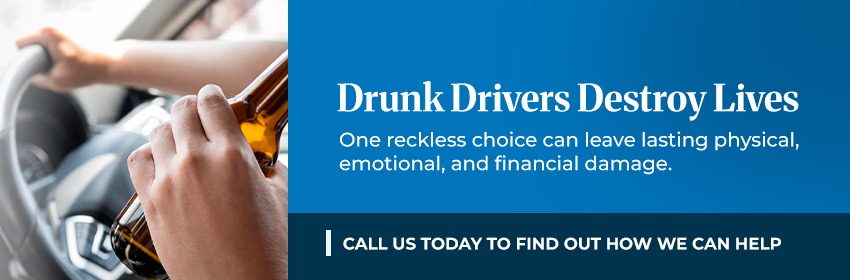
Drunk driving accidents involve both criminal charges against the driver and civil claims for your injuries. Police arrest the impaired driver, prosecutors file DUI charges, and you separately pursue compensation for your medical bills, lost wages, and pain and suffering. Drunk driving cases may qualify for punitive damages that punish particularly reckless behavior.
The criminal case prosecutes the drunk driver for breaking the law. The district attorney's office handles this separately from your injury claim. A guilty verdict in criminal court helps prove liability in your civil case, but you don't need to wait for criminal proceedings to file your claim.
Your civil case pursues money damages from the drunk driver and their insurance company. You control this case through your attorney, who investigates independently and doesn't rely solely on what prosecutors uncover. Criminal cases aim to punish the offender, while civil cases compensate you for harm suffered.
North Carolina allows punitive damages when a defendant's conduct shows willful disregard for others' safety. Drunk driving meets this standard. A person who chooses to get behind the wheel after drinking at South Slope breweries and crashes into your vehicle on Haywood Road made a conscious decision to endanger others.
Punitive damages:
Police reports document field sobriety test results, breathalyzer readings, and officer observations of slurred speech and alcohol odor.
Dash camera footage from the patrol car shows the driver stumbling through sobriety tests.
Toxicology reports confirm blood alcohol content above North Carolina's legal limit of 0.08%.
Bar receipts and credit card statements prove how much the driver drank before getting in their car.
Witnesses can testify about the driver's intoxication level before they left.
Surveillance footage from parking lots may show the driver stumbling to their vehicle.
Drunk driving crashes cluster around downtown entertainment districts, along routes between bars and residential areas, and on highways where impaired drivers travel at high speeds. Patton Avenue, Broadway, Haywood Road, and Merrimon Avenue see frequent DUI collisions during late-night and early-morning hours when bars close.
Downtown and the South Slope generate heavy drunk driving traffic Thursday through Sunday nights. Impaired drivers leaving breweries and bars attempt to navigate one-way streets, crowded intersections near Pack Square, and pedestrian-heavy areas around Pritchard Park.
River Arts District sees drunk drivers leaving studios, galleries, and tasting rooms. They travel Riverside Drive, cross the French Broad River bridges, and merge onto major roads while impaired. Narrow roads and limited lighting increase crash risks.
I-240 and I-26 become deadly corridors for drunk drivers traveling at highway speeds. Impaired drivers drift across lanes, exit highways at excessive speeds, or fall asleep at the wheel. High-speed collisions on these routes often result in fatalities.
Late-night hours between 11 PM and 3 AM see the highest concentration of drunk driving accidents. Bar closing times around 2 AM create spikes in the number of impaired drivers on Asheville roads.
Drunk drivers traveling from downtown to residential neighborhoods in West Asheville, North Asheville, or East Asheville use Patton Avenue, Merrimon Avenue, and Tunnel Road. They run red lights at major intersections, speed through residential zones, and strike vehicles waiting at traffic signals.
College students leaving UNCA area bars or parties drive impaired on Broadway and Merrimon Avenue. Young drivers with less experience handling alcohol and operating vehicles create particularly dangerous conditions.
Yes. New Year's Eve, Fourth of July, and major festival weekends see significant increases in drunk driving accidents. Bele Chere weekend, LEAF Festival, and Oktoberfest events bring visitors who drink heavily and drive unfamiliar roads while impaired.
Traumatic brain injuries, spinal cord damage, and internal bleeding occur most frequently in drunk driving accidents. Impaired drivers react slowly or not at all, resulting in high-speed collisions without braking. Victims suffer catastrophic injuries that require emergency surgery and months of rehabilitation.
Traumatic brain injuries range from severe concussions to permanent brain damage:
Spinal cord injuries cause partial or complete paralysis. A drunk driver crossing the center line on Merrimon Avenue and striking your vehicle head-on can compress your spine, severing nerve connections. Recovery involves extensive rehabilitation, adaptive equipment, and home modifications costing hundreds of thousands of dollars.
Internal injuries from blunt force trauma damage organs without visible external wounds:
Multiple fractures occur when collision forces exceed what bones can withstand:
Joint damage includes torn ligaments, dislocated shoulders, and shattered knees. Recovery requires multiple surgeries, months of physical therapy, and may result in permanent mobility limitations.
High-speed drunk driving crashes sometimes result in vehicle fires. Victims trapped in vehicles suffer severe burns requiring skin grafts, multiple surgeries, and years of treatment. Burn injuries cause permanent scarring, chronic pain, and significant psychological trauma.
Victims of drunk driving accidents often develop post-traumatic stress disorder. Symptoms include:
Mental health treatment becomes a necessary component of recovery and should be included in your damages claim.
At Galbavy Law, we help you gather and analyze every piece of evidence, from police reports and sobriety tests to witness and passenger statements. Our drunk driving accident lawyers can build a strong case proving the driver’s impairment and your right to full compensation.
We start with the crash report and the officer’s recorded observations from the scene, whether the collision happened on Patton Avenue, I-240, or another Asheville route. Officers often document slurred speech, bloodshot eyes, a strong odor of alcohol, open containers, admissions of drinking, and failed field sobriety tests.
When officers conduct standardized field sobriety tests, we look at exactly what was done and how the driver failed. These tests can include the walk-and-turn, one-leg stand, and horizontal gaze nystagmus exam, and the failures are written into the report.
Breathalyzer results from the scene or station help establish BAC, and readings above 0.08% support DUI, while higher readings like 0.15% or 0.20% help show extreme intoxication.
Blood tests performed during emergency treatment can provide strong, scientific proof of BAC. These tests are often more accurate than breath tests and harder to challenge. When legally obtained through the proper channels, this evidence can become the backbone of proving intoxication.
We review toxicology results to determine whether alcohol, drugs, or both contributed to impaired driving. Marijuana, cocaine, prescription medications, and other substances can be part of the picture, and North Carolina prohibits driving under the influence of any impairing substance. This step matters because impairment isn’t always just alcohol, and insurers may try to minimize or ignore drug involvement.
Witness testimony helps confirm what happened before the crash. Bar staff and patrons from South Slope breweries or downtown spots may describe how many drinks were served, signs of visible intoxication, whether anyone tried to stop the driver, and when the driver left. Other drivers may describe swerving, speeding, running red lights, or near-misses before the collision, and dashcam footage can add visual proof.
Passengers in the drunk driver’s vehicle can provide some of the most direct evidence of drinking and impairment. They may describe alcohol consumption, the driver’s behavior, and whether anyone warned the driver not to get behind the wheel. This testimony can be especially damaging when the driver later claims they “were fine” or “only had a couple.”
Yes, under North Carolina's dram shop law, you can sue establishments that serve visibly intoxicated patrons or minors who then cause injury. For example, bars, breweries, and restaurants on the South Slope or in the River Arts District that continue serving someone who shows clear signs of intoxication may share liability for any crashes that result.
Establishments can be held liable when they:
Visible intoxication includes slurred speech, difficulty walking, aggressive behavior, or inability to handle money. Bartenders and servers trained to recognize these signs have a legal duty to stop service.
Evidence your attorney collects:
Expert testimony from alcohol service professionals explains how a reasonably trained bartender should have recognized the patron's intoxication level. They calculate how many drinks would produce the BAC measured after the crash.
North Carolina does not have a statutory social host law. Liability for private hosts is rare and generally applies only when:
Adults hosting private parties where all guests are of legal drinking age usually aren’t automatically liable for crashes caused by intoxicated drivers.
All establishments that served the visibly intoxicated person may share liability. If the driver visited three different South Slope breweries and showed signs of intoxication at the last two, both of those establishments could be held responsible.
You may be entitled to recover medical expenses, lost wages, property damage, pain and suffering, and punitive damages. Drunk driving cases allow you to recover both compensatory damages that cover your actual losses and punitive damages that punish the drunk driver's willful misconduct. Total recovery in DUI cases often exceeds what you'd receive in standard negligence claims.
Economic losses include:
Non-economic damages compensate for:
North Carolina allows punitive damages up to three times your compensatory damages or $250,000, whichever is greater. Courts can exceed the cap when the defendant's conduct was especially egregious.
Factors that increase punitive damages:
Each of those facts may support a claim of willful or wanton conduct, but a court or jury must find the legal standard is met by clear and convincing evidence before punitive damages can be awarded.
Insurance policies typically do not cover punitive damages in DUI cases. Even if a jury awards punitive damages, the at‑fault driver, not their insurer, generally must pay them out of personal assets.
When drunk drivers kill your family member, you can recover:
Wrongful death cases involving drunk drivers often result in substantial verdicts that reflect the tragic loss and the defendant's inexcusable conduct.
North Carolina's contributory negligence rule still applies, but courts are less likely to find victims at fault when struck by drunk drivers. Insurance companies may argue you were speeding or failed to avoid the collision, but judges and juries typically reject these arguments when the other driver chose to operate a vehicle while severely impaired.

Drunk driving represents such extreme negligence that comparative fault arguments carry less weight. A driver with a BAC of 0.15% who crosses the center line on Merrimon Avenue and strikes your vehicle head-on made a choice that courts view as willful misconduct.
Courts recognize:
Even in drunk driving cases, you need to follow traffic laws. If you were also driving drunk, ran a red light, or committed serious violations, the insurance company can still use contributory negligence to bar your claim.
Situations where your conduct might affect your claim:
Your attorney gathers evidence proving you were following all traffic laws and couldn't have avoided the collision despite the drunk driver's sudden appearance in your path.
Call an attorney immediately after any crash involving a drunk driver, regardless of injury severity. Drunk driving cases require quick evidence preservation, investigation of bar liability, and strategic handling of both criminal and civil proceedings. Early legal representation protects your right to maximum compensation, including punitive damages.
Evidence disappears quickly:
The criminal case proceeds on its own timeline. Your attorney needs to monitor criminal proceedings, obtain discovery from prosecutors, and use criminal evidence in your civil case. Waiting to hire a lawyer means missing opportunities to gather helpful information from the criminal case.
Insurance companies move fast to minimize their exposure. They contact witnesses, take statements, and build defenses before you've even left the hospital. Having your attorney involved from day one prevents the insurance company from controlling the narrative.
You definitely need a lawyer if:
Complex cases require experienced representation:
Your lawyer launches an independent investigation within hours of being hired. They send preservation letters to bars requiring them to save surveillance footage and transaction records. An experienced lawyer interviews witnesses before insurance adjusters reach them. They work with accident reconstruction experts to document the scene before evidence disappears.
Lawyers handle all communication with insurance companies, protecting you from saying anything that could hurt your claim. They coordinate with criminal prosecutors while maintaining your separate civil case.
Attorneys calculate your total damages, such as future losses, and prepare a demand that reflects the full value of your claim, including punitive damages.
DUI accident cases often take longer than standard crashes because they may involve criminal charges, punitive damages, or additional defendants. Straightforward cases can be resolved within a year, while severe injury or death cases may take longer.
Yes. Injured passengers can file claims against the drunk driver’s insurance and potentially against bars or hosts who overserved alcohol. Passengers are rarely blamed and often have strong claims.
You may still recover compensation through your uninsured motorist coverage. In some cases, additional claims may exist against bars, employers, or social hosts who contributed to the driver’s intoxication.
No. Most cases settle, but DUI claims often involve longer negotiations because damages are more serious. Insurance companies know juries are tough on drunk drivers, which can lead to stronger settlement offers.
Yes. A civil case does not depend on a criminal conviction. Police observations, breath or blood tests, and witness statements can still prove impairment in a personal injury claim.
Underage DUI cases may involve additional liability for parents or adults who provided alcohol. North Carolina’s zero-tolerance law strengthens claims when any alcohol is found in an underage driver’s system.
Punitive damages are based on how reckless the driver’s behavior was, including BAC level, prior DUIs, and driving conduct. Higher intoxication and repeat offenses often support larger punitive awards.
You should speak with an attorney as soon as possible. While statements can’t be undone, a lawyer can limit further damage and take over all communication with the insurer moving forward.
Yes. Eligible family members can pursue wrongful death claims for medical bills, funeral costs, lost income, and loss of companionship, along with punitive damages tied to the drunk driver’s conduct.
Usually not. Debts caused by drunk driving are typically not dischargeable in bankruptcy. Courts recognize DUI injuries as willful misconduct, allowing victims to continue pursuing compensation.
If you were injured by a drunk driver, the next step is to speak with an Asheville drunk driving accident attorney for a free case review.
Bring any available police reports, medical records, insurance correspondence, and information about where the driver may have been drinking before the crash. An attorney reviews your situation, explains your right to both compensatory and punitive damages, and outlines the steps needed to pursue full recovery.
After the consultation, you decide whether to move forward. If you hire our firm, our legal team immediately begins investigating bar liability, preserving video evidence, and interviewing witnesses. While you focus on healing, Galbavy Law pursues full compensation to hold the drunk driver accountable for their reckless decision.
Call Galbavy Law at 704-412-4466 to discuss how the crash occurred, the injuries you or your loved one suffered, and what evidence exists showing the driver’s intoxication. Our attorney explains the fee structure, expected timeline, and what actions to take now to protect your claim while legal proceedings move forward.

1 Prior results do not guarantee similar outcomes in future cases because each case is unique and must be evaluated separately. The only way we can assist you is for you to call us about your case.
Protected by reCAPTCHA. Google Privacy Policy and Terms of Service apply.