North Carolina requires drivers to maintain automobile liability insurance with minimum limits of $50,000 for bodily injury to one person, $100,000 for bodily injury to two or more people in one accident, and $50,000 for property damage. These limits are commonly written as 50/100/50.
North Carolina automobile policies also generally include uninsured motorist coverage, commonly called UM coverage, and underinsured motorist coverage, commonly called UIM coverage. UM coverage can protect you when an at fault driver has no applicable insurance. UIM coverage may provide additional compensation when the at fault driver has insurance, but the available liability coverage is not enough to compensate you fully for your injuries.
Major changes applying to policies issued or renewed beginning July 1, 2025 increased North Carolina's minimum liability limits and eliminated the former liability credit that reduced available UIM coverage. As a result, an injured person may now have access to the at fault driver's exhausted liability coverage plus applicable UIM coverage, subject to the policy terms and North Carolina law.
When someone is injured in a North Carolina car accident, proving that the other driver was negligent is only part of the case. It is also necessary to determine how much insurance coverage is available.
Policy limits establish the maximum amount an insurance company may be required to pay under a particular coverage. Those limits can determine whether sufficient insurance is available to compensate an injured person for:
A person may have a strong liability claim and substantial damages but still face a difficult recovery when the available insurance limits are too low. That is why identifying liability, UM, UIM, MedPay, employer, vehicle owner, household, commercial, and umbrella coverage should be an important part of the investigation.
For automobile policies subject to the current requirements, North Carolina's minimum liability limits are:
These limits are commonly described as 50/100/50.
The first number is the maximum bodily injury liability coverage available to any one injured person. The second number is the maximum bodily injury liability coverage available to all injured people combined in one accident. The third number is the maximum property damage liability coverage available for the accident.
The applicable requirements are set out in North Carolina General Statute § 20-279.21.
For many years, North Carolina's minimum automobile liability limits were 30/60/25:
For policies issued or renewed beginning July 1, 2025, the minimum limits increased to 50/100/50. Because automobile policies renew on different dates, the new requirements took effect for individual drivers as their policies were issued or renewed under the new law.
The increase provides more liability coverage than the former minimum limits, but $50,000 can still be inadequate in a serious injury case. An ambulance trip, emergency care, diagnostic testing, surgery, rehabilitation, lost income, and future treatment can quickly produce damages well above the minimum coverage.
Bodily injury liability coverage protects an insured driver when that driver causes injuries to another person. Depending on the facts and applicable law, it may provide compensation for damages such as:
Liability insurance protects the person who caused the collision by paying covered claims up to the applicable policy limits. At the same time, it provides a source of compensation for people injured by the insured driver's negligence.
Property damage liability coverage may pay for covered damage caused to another person's property, including:
Liability coverage generally does not pay for the at fault driver's own injuries or damage to the at fault driver's own vehicle. Those losses may be addressed through other coverages, such as collision coverage, health insurance, disability coverage, or Medical Payments coverage.
Uninsured motorist coverage, usually abbreviated as UM coverage, protects an insured person who is legally entitled to recover damages from an uninsured or qualifying hit and run driver.
UM coverage may apply when:
UM bodily injury coverage may compensate an insured person for covered bodily injury damages caused by the uninsured driver's negligence. North Carolina policies also generally include uninsured motorist property damage coverage, subject to the policy terms, statutory requirements, and a $100 statutory exclusion for each insured.
Assume an uninsured driver runs a red light and causes a collision. The injured person has $100,000 in UM bodily injury coverage and sustains $80,000 in recoverable damages.
Because the at fault driver has no applicable liability insurance, the injured person may pursue a UM claim under an applicable policy. The injured person must still establish liability, causation, damages, coverage, and compliance with the policy and statutory requirements.
A UM claim is not automatically paid simply because the other driver lacks insurance. The UM carrier may investigate the collision, dispute fault, challenge the nature or extent of the injuries, question whether the claimant qualifies as an insured, or raise other policy defenses.
Underinsured motorist coverage, usually abbreviated as UIM coverage, may apply when the at fault driver has liability insurance, but the applicable liability coverage is insufficient to compensate the injured person fully.
Under current North Carolina law, a vehicle may qualify as underinsured when the applicable bodily injury liability limits are less than the injured person's total damages. In a collision involving multiple injured people, UIM may also apply when the liability coverage is exhausted and the amount actually paid to a particular claimant is less than that claimant's total damages.
UIM coverage applies only after the applicable liability coverage has been exhausted by payment or tender, unless the UIM insurer elects to make an earlier payment as permitted by law.
Assume an at fault driver has $50,000 in bodily injury liability coverage. The injured person has $100,000 in UIM coverage and sustains damages exceeding $150,000.
The actual recovery depends on the proven damages, liability, applicable policies, coverage provisions, liens, offsets allowed by law, and other facts. Policy limits do not establish the value of a claim. They establish the maximum potentially available under that coverage.
| Issue | UM Coverage | UIM Coverage |
|---|---|---|
| Does the at fault driver have liability insurance? | Usually no, or the insurer denies coverage | Yes, but the available coverage is insufficient |
| Can it apply to bodily injuries? | Yes | Yes |
| Can it apply to property damage? | UM property damage coverage may apply | North Carolina's required UIM coverage is bodily injury coverage |
| Can it apply to a hit and run? | Potentially, if the statutory and policy requirements are satisfied | Generally not when the responsible vehicle and liability coverage cannot be identified |
| Whose insurance generally provides the coverage? | An applicable policy under which the injured person qualifies as an insured | An applicable policy under which the injured person qualifies as an insured |
| Must the injured person still prove the claim? | Yes | Yes |
Before the 2025 change, North Carolina generally permitted a UIM insurer to reduce its applicable limit by the liability insurance available from the at fault driver. This was commonly called a setoff or credit.
For policies governed by the current law, UIM applies beyond amounts paid under the exhausted liability coverage. The UIM limit is not reduced by a credit for the at fault driver's liability payment.
This change can make substantially more coverage available in serious injury cases. However, the injured person must still prove damages sufficient to support the recovery. A claimant does not automatically receive every available policy limit.
North Carolina law permits certain UM and UIM limits from separate applicable policies to be combined. This is sometimes called interpolicy stacking.
For example, an injured person may potentially qualify as an insured under:
The analysis is highly dependent on the policy language, the claimant's relationship to the named insured, household residency, the type of vehicle, and the statutory priority rules.
North Carolina generally does not permit a claimant to multiply the UM or UIM limit merely because several vehicles are listed on the same policy. The highest applicable limit under that policy is ordinarily used rather than adding the limit for every vehicle insured on the policy.
Depending on the policy and the circumstances, persons insured may include:
Coverage questions involving household members can be complicated. The address on a driver's license is relevant, but it does not necessarily resolve whether someone was a resident of a household for insurance purposes. Courts and insurers may examine where the person actually lived, the nature and permanence of the living arrangement, family relationships, financial ties, and other facts.
North Carolina law contains special procedural requirements for claims involving an unidentified hit and run driver.
When the identity of the owner or operator cannot be determined, the collision should be reported to law enforcement within 24 hours or as soon as reasonably practicable. Notice should also be provided to the applicable insurance carrier within a reasonable time.
Because missed notice requirements can create coverage disputes, a person injured in a hit and run should:
Medical Payments coverage, commonly called MedPay, is optional automobile coverage that may pay covered medical expenses incurred by an insured person following a motor vehicle accident.
Unlike liability, UM, or UIM coverage, MedPay generally does not depend on proving that another driver was negligent. It may provide benefits even when the insured person caused the collision, subject to the policy terms.
MedPay may help with expenses such as:
MedPay is not a substitute for bodily injury liability, UM, or UIM coverage. It is a separate first party benefit. Whether multiple MedPay coverages can be combined depends on the policies and circumstances and should be evaluated individually.
When the available liability coverage is not enough, additional investigation may identify other sources of recovery.
Potential sources may include:
When the liability coverage is exhausted and the claimant's damages exceed the amount recovered, applicable UIM coverage may provide an additional source of compensation.
An injured person may pursue the at fault driver personally for damages exceeding the insurance limits. However, a judgment does not guarantee collection. Many individuals have limited nonexempt assets, and North Carolina law restricts some collection methods. Bankruptcy may also affect collectability.
For that reason, identifying all available insurance is often more productive than relying solely on a personal judgment against an individual driver.
A UM or UIM claim is made through an applicable policy, but the injured person is still asserting that another driver's negligence caused the loss. Whether a claim affects future premiums depends on North Carolina rating rules, the insurer, the policy, the insured's claims history, and how the accident is classified.
An injured person should not give up a potentially valuable UM or UIM claim based solely on an assumption that making the claim will automatically cause a rate increase. The coverage was purchased to protect the insured when another driver has no insurance or insufficient insurance.
Many drivers focus on liability coverage because it protects them if they cause a collision. UM and UIM coverage are different because they protect the insured person and qualifying family members from the financial consequences of another driver's inadequate insurance.
When selecting limits, consider that a serious collision may involve:
North Carolina law permits UM bodily injury and UIM limits up to $1,000,000 per person and $1,000,000 per accident, although insurers are not required under the statute to sell higher limits. Drivers may wish to ask their insurance agent for the cost of several different limit options.
The appropriate amount depends on income, assets, family circumstances, risk tolerance, other insurance, and the cost of the coverage. A driver should review the declarations page and confirm the actual limits rather than assuming that full protection was automatically selected.
Your automobile insurance declarations page provides a summary of the vehicles, insured drivers, coverages, limits, deductibles, and premiums.
Look for the following:
Under current North Carolina law, an insurer must notify the named insured that UM and UIM coverage is required and explain that different limits may be selected within the statutory boundaries. If no different election is made, the UM bodily injury and UIM limits generally correspond to the highest bodily injury liability limits for a vehicle insured under the policy, while UM property damage generally corresponds to the highest property damage liability limit.
Insurance coverage can affect nearly every stage of a serious injury case. An attorney may need to investigate:
A claimant should be cautious before signing a release. Settling with the liability carrier without properly protecting an applicable UIM claim can create serious coverage problems. North Carolina law gives a UIM carrier specific notice and advancement rights before certain settlements are completed.
Higher policy limits do not automatically make an injury claim more valuable. The value of the claim still depends on the facts, including liability, causation, medical evidence, lost income, permanency, credibility, available defenses, and recoverable damages.
However, higher limits can make more compensation available when the proven damages justify it. Serious cases may require:
It is often unwise to resolve a serious injury claim before the medical condition, prognosis, and available insurance coverage are reasonably understood.
Legal assistance may be particularly important when:
At Galbavy Law, we investigate available insurance coverage as part of evaluating a North Carolina personal injury claim. That may include reviewing liability, UM, UIM, MedPay, commercial, household, employer, and umbrella policies.
If you were injured in a North Carolina car accident and have questions about available insurance coverage, contact Galbavy Law for a free consultation.
North Carolina's current automobile insurance laws provide more protection than the former 30/60/25 system, but minimum coverage may still be inadequate after a serious collision.
Liability coverage protects you when you cause an accident. UM coverage protects you when a negligent driver has no applicable insurance. UIM coverage can provide additional compensation when the negligent driver's liability insurance is insufficient. MedPay may provide separate medical expense benefits without requiring proof that another driver was at fault.
Understanding these coverages before an accident allows you to make better insurance decisions. Understanding them after an accident can help ensure that every potentially available source of compensation is properly investigated.
This article is provided for general informational purposes and is not legal advice. Insurance coverage depends on the policy language, the applicable law, and the specific facts of each claim.
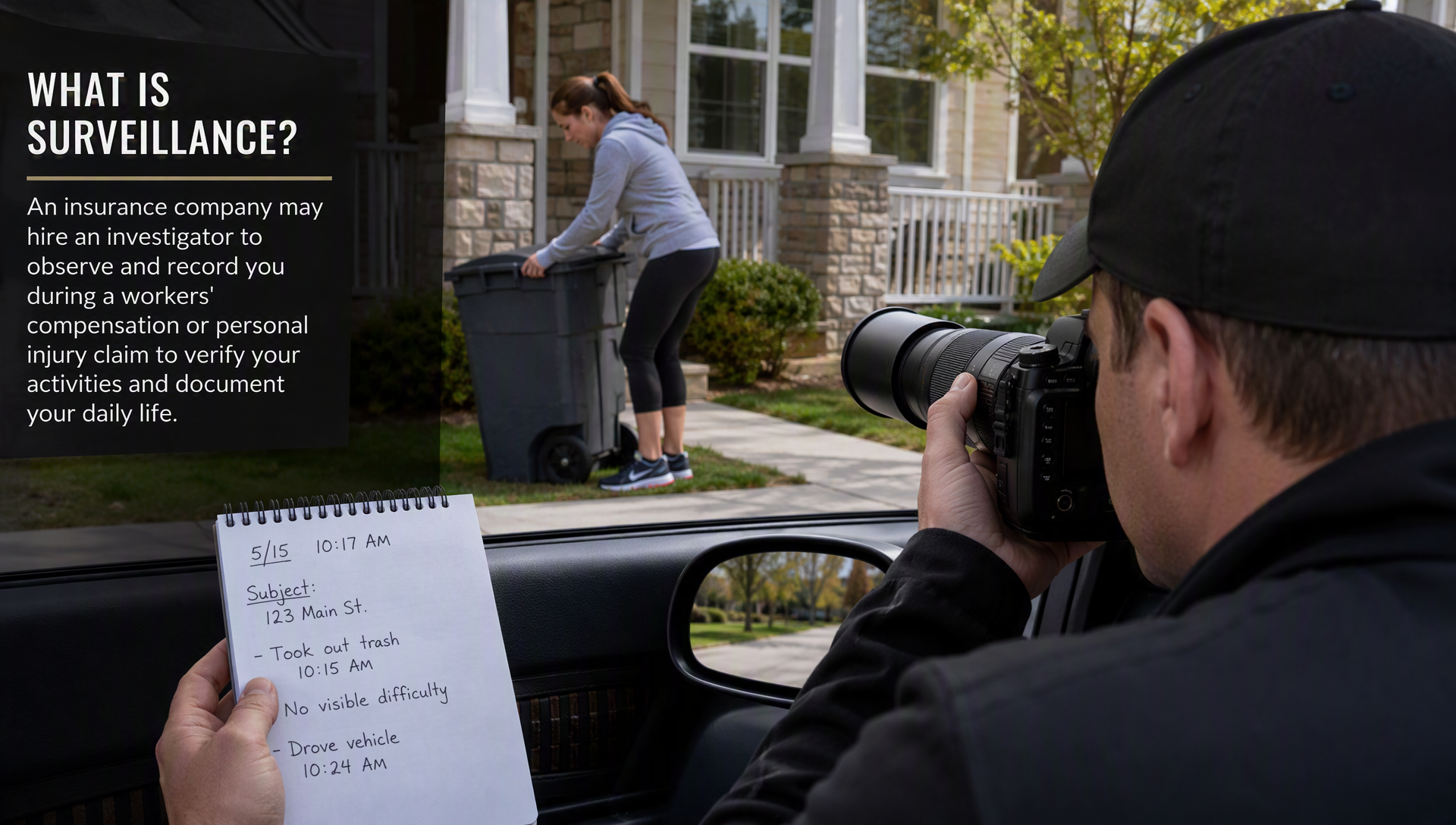
Quick Answer Yes, in the sense that an insurance company may hire an investigator to...
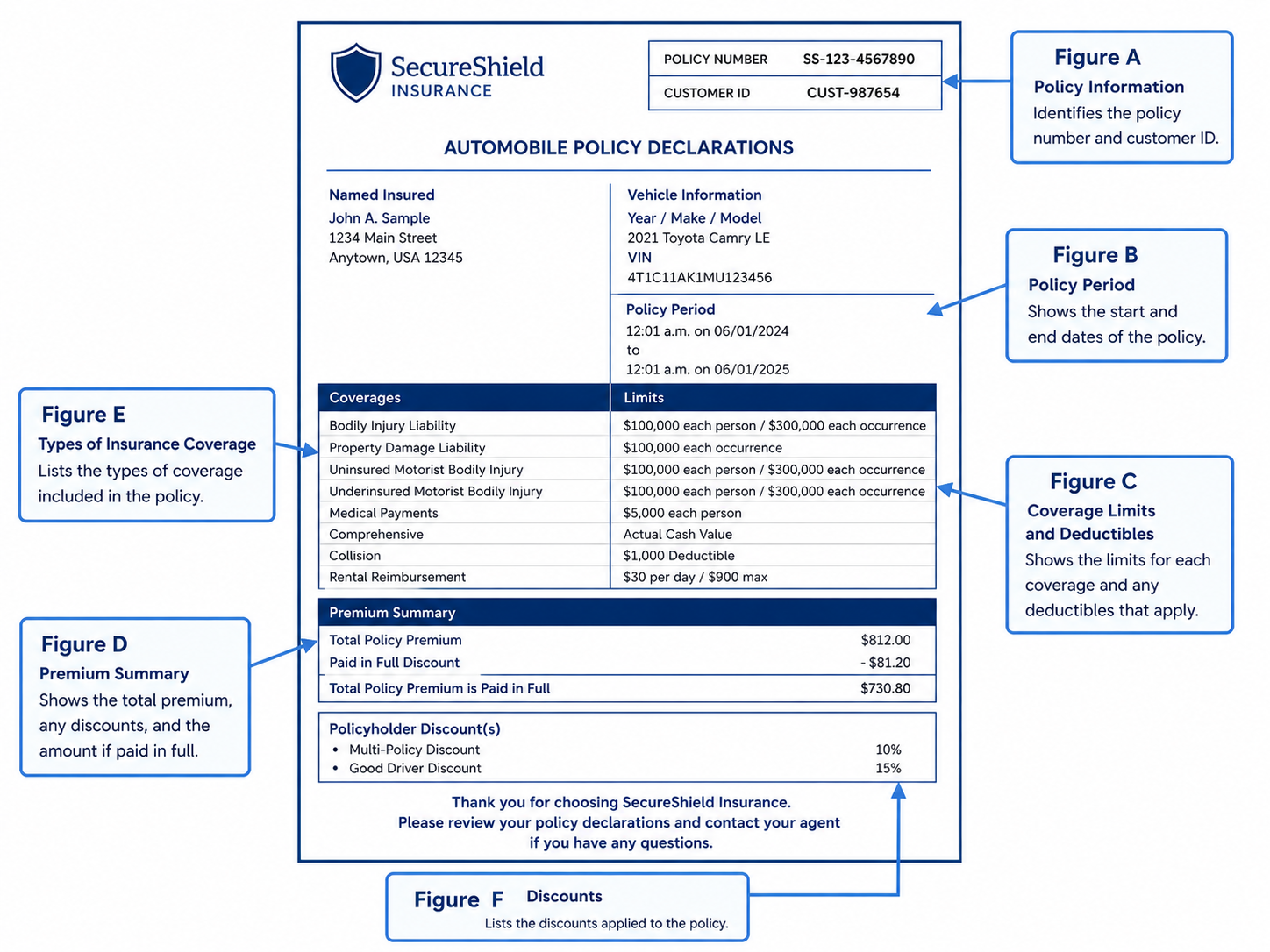
Quick Answer: An automobile insurance declarations page is a summary of the policy that was...

Quick Answer Beginning October 1, 2026, the North Carolina Division of Motor Vehicles will transition...

1 Prior results do not guarantee similar outcomes in future cases because each case is unique and must be evaluated separately. The only way we can assist you is for you to call us about your case.
Protected by reCAPTCHA. Google Privacy Policy and Terms of Service apply.