If you were hurt in a car accident in Gastonia, you have the right to seek payment for medical bills, lost income, and the impact the crash has had on your life. A car accident lawyer helps protect those rights, deals with insurance companies, and builds a case that shows who caused the wreck and why you shouldn’t be stuck paying for someone else’s mistake.
Car crashes happen every day around Gastonia. Traffic backs up on I-85, merges on US-321 gets messy, and Franklin Boulevard turns into stop-and-go during peak hours. One wrong move and your day can flip quickly. You’re dealing with pain, car repairs, missed work, and phone calls from insurance adjusters who want answers before you’ve even had time to think.
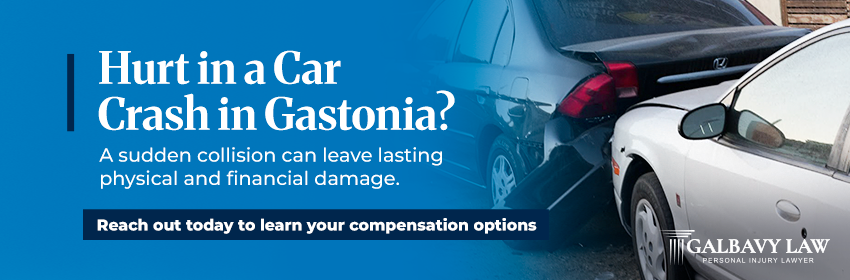
North Carolina’s fault rules make car accident cases tougher than people expect. If an insurer can pin even a small part of the blame on you, they may try to deny the claim completely. That’s why handling a case the right way from the start matters, especially here in Gaston County.
At Galbavy Law, we help injured drivers get clear answers and real guidance. No gimmicks. No sales talk. Just hands-on, local representation focused on protecting you and moving your case forward.
Most car accidents in Gastonia occur due to driver behavior, combined with heavy traffic and poor road conditions. Speeding, distraction, and failure to follow basic traffic rules are common causes, especially on major roads like I-85 and US-321, and in busy city corridors, where mistakes leave little time to react.
High speeds increase the severity of crashes and reduce a driver’s ability to stop in time. Aggressive driving often shows up in heavy traffic, where drivers tailgate, change lanes abruptly, or try to push through congestion during peak hours.
City driving demands constant attention, yet many crashes happen because a driver looks away for just a moment. Phones, navigation systems, and in-car distractions take focus off the road when quick reactions matter most.
Intersections throughout Gastonia see frequent crashes when drivers rush left turns or ignore right-of-way rules. These collisions are common near shopping areas and high-traffic corridors where multiple lanes and signals create confusion.
Rain, low light, and worn lane markings make it harder to see hazards and judge distance. Slick pavement and limited visibility increase the chance of losing control or stopping too late, especially during storms or early morning and evening drives.
Neck, back, joint, and head injuries are especially common, along with more serious trauma in higher-speed wrecks on I-85 and US-321. Car accidents often cause injuries that don’t show up right away. In Gastonia crashes, many people feel fine at first, only to notice pain or symptoms days later.
The force of a collision can strain muscles, joints, and soft tissue even when there are no visible injuries. These issues often worsen after the adrenaline wears off.
A person doesn’t need to hit their head to suffer a brain-related injury. Rapid movement inside the vehicle can still cause lasting symptoms.
Crashes involving speed, multiple vehicles, or large trucks often result in more severe injuries and longer recovery times.
Early treatment helps catch injuries before they worsen and documents the connection between the crash and your condition. Consistent medical records also make it harder for insurance companies to downplay the seriousness of your injuries later on.
You may have a car accident claim in Gastonia if another driver caused the crash and you suffered injuries, car damage, or lost income. Even crashes that seem minor at first can lead to valid claims, especially under North Carolina’s strict fault rules, which make early evaluation important.
Many local claims start with everyday crashes. Rear-end accidents happen often in stop-and-go traffic on Franklin Boulevard or during backups on I-85. Intersection crashes are also common when drivers rush through lights or misjudge turns. These types of wrecks usually point to driver error, even when insurance companies try to complicate the issue.
Insurance companies don’t decide fault based on fairness. They rely on reports, statements, and small details they can use to shift blame. A single comment or missing detail can change how they label a crash. That’s why fault is often disputed, even when responsibility seems clear.
A crash turns into a legal claim when injuries, repair costs, or time away from work create real losses. Once insurance companies push back, delay, or deny responsibility, legal guidance becomes important.
Fault is based on traffic laws and what actually happened, not what an insurance adjuster says. Police reports, photos, witness statements, and vehicle damage often tell a clearer story than initial assumptions.
Car accident cases in Gastonia aren’t handled in a vacuum. Local traffic patterns, how crashes are investigated, and the way insurance companies respond all shape how a case unfolds. Knowing how things work on the ground in Gaston County helps avoid surprises that can hurt a claim later.
Gastonia traffic creates repeat crash patterns that don’t always show up on paper. Congestion on I-85, quick merges along US-321, and stop-and-go stretches of Franklin Boulevard all contribute to specific types of collisions.
Understanding where and how crashes happen helps explain why a driver couldn’t avoid the collision.
Police reports matter, but they’re not always complete. Officers may arrive after vehicles are moved, or they may rely heavily on driver statements when witnesses aren’t obvious.
Knowing what to look for in these reports helps fill in the gaps.

Insurance companies adjust their strategy based on location. In Gaston County, they often push contributory negligence arguments early and delay decisions to gain leverage.
Local experience helps anticipate these moves and respond before they create problems.
Most car accident cases in Gastonia start as insurance claims, but lawsuits become necessary when insurance companies refuse to act fairly. Each option has advantages and drawbacks, and the right path depends on how the insurer responds, how serious the injuries are, and how much is at stake in the case.
A car accident claim stays outside the courtroom and is handled directly with the insurance company. After a crash, the claim process usually begins with the submission of reports, medical records, and repair estimates to the insurer.
Claims can move faster, but that speed often favors the insurer. Adjusters may delay responses, dispute fault, or push for early settlements before the full impact of the injury is known.
A lawsuit moves the case into the Gaston County court system and immediately adds structure and accountability. Deadlines apply, evidence must be exchanged, and both sides must prepare as if the case could be decided by a jury.
Even if a case never reaches trial, filing a lawsuit often changes how seriously an insurer treats the claim.
Escalation is often the right move when fault is disputed, injuries are serious, or the insurer keeps shifting blame under North Carolina’s strict fault rules. In many Gastonia car accident cases, a lawsuit is what finally creates real leverage and pushes the case toward a fair outcome instead of endless back-and-forth.
North Carolina law sets a firm time limit for taking legal action after a car accident. If that deadline is missed, the case is usually over, no matter how serious the injuries are or how clear the other driver’s fault may be. Knowing how the timing works is critical to protecting your rights.
After a car accident in Gastonia, the legal clock usually starts running on the date of the crash. North Carolina gives injured drivers a limited period to file a lawsuit related to the accident. Once that time runs out, courts typically won’t allow the case to move forward.
Many people assume that opening an insurance claim or talking with an adjuster pauses the deadline. It doesn’t. While negotiations continue, the legal clock keeps ticking in the background.
Waiting doesn’t just create deadline risks. It also makes it harder to prove cases. Evidence is easiest to collect right after a crash, especially on busy roads like I-85 or US-321.
As time passes:
Insurance companies also use delays to argue that injuries weren’t serious or weren’t caused by the crash, especially when there are gaps in medical treatment.
Some car accident cases don’t follow the standard timeline. Certain situations require faster action or extra notice, and missing those steps can end a claim early. Examples include:
Because these timing issues aren’t always obvious, getting answers early helps protect your case and prevents insurers from quietly running out the clock while you focus on healing.
Insurance companies handle car accident claims in Gastonia with one main goal in mind: limiting what they pay out. Early phone calls, quick settlement offers, and fault-shifting tactics are common, especially when injuries are involved. Knowing how insurers operate helps you avoid mistakes that can weaken your claim.
Soon after a crash, you’ll likely get a call from an insurance adjuster. They may sound friendly and concerned, but the goal of that call is to gather information they can later use to reduce or deny the claim. This often happens before you’ve had time to see a doctor or understand the full impact of the crash.
Adjusters may ask for recorded statements, especially after accidents on I-85, US-321, or busy Gastonia streets. These recordings lock in your words early, sometimes before pain or symptoms fully appear.
Quick settlement offers are another common tactic. Insurance companies know that medical bills, car repairs, and missed work create financial stress. An early offer can seem tempting, especially when it arrives before the full cost of the injury is clear.
These offers usually don’t account for:
Once a settlement is accepted, the claim is closed, even if new problems show up later.

When insurers don’t push for a fast settlement, they often slow things down instead. Delays can drag on for months, especially once medical treatment begins or fault is disputed under North Carolina’s strict rules.
Common delay tactics include:
These delays are meant to wear people down and reduce pressure on the insurer.
You’re not required to give a recorded statement to the other driver’s insurance company. These statements are often used to shift blame or question injuries later. It’s usually better to understand your rights and the facts of your case before agreeing to be recorded.
When the other driver denies causing the crash, car accident claims are decided by evidence, not opinions. In Gastonia cases, police reports, photos, vehicle damage, and witness statements often play the biggest role in determining who was actually at fault.
It’s common for drivers to admit fault at the scene and then change their version later. Once insurance companies get involved, the stakes become real. Higher premiums, possible lawsuits, and financial responsibility give drivers a reason to protect themselves.
After crashes on busy roads, drivers may claim they were cut off, stopped suddenly, or had no time to react. These explanations often surface days later, not at the scene, after the driver has spoken with their insurer.
Police reports are an important starting point, but they don’t always settle fault. Officers may arrive after vehicles are moved or rely on brief statements when traffic needs to clear quickly. Insurance companies then review these reports and add their own interpretation. They may focus on certain notes, diagrams, or citations while ignoring context that favors you.
That’s why reports need to be read carefully, not taken at face value.
When stories conflict, independent evidence becomes critical. Witnesses who saw the crash happen often provide clarity that neither driver can control. Physical evidence also tells a story that statements can’t erase.
Photos of vehicle damage, skid marks, debris, and the final resting position of cars often show how the crash unfolded. In Gastonia, nearby businesses or traffic cameras may also capture useful footage, but it doesn’t last forever.
When both drivers point fingers, insurance companies look for reasons to deny both claims. That’s where evidence matters most. Witness accounts, physical damage, and crash details can break the tie and show which driver actually caused the collision.
North Carolina follows a strict fault system that can block compensation if you’re found even slightly responsible for a crash. This rule plays a major role in Gastonia car accident cases and heavily influences how insurance companies investigate, negotiate, and deny claims.
North Carolina uses a contributory negligence rule, which is one of the toughest fault standards in the country. Under this rule, if you’re found even one percent at fault for a car accident, you can be barred from recovering anything at all.
In real-world terms, that means a crash doesn’t have to be “your fault” for your claim to be denied. Insurance companies look for any action they can point to, even something minor, to argue that you contributed to the accident.
This rule comes up often in Gastonia crashes involving lane changes, sudden stops, or multi-vehicle collisions on roads like I-85 and US-321. Because of this standard, fault becomes the central issue in nearly every car accident case.
Insurance companies rely on contributory negligence as a defense tool. Adjusters look closely at statements, reports, and small details that can be framed as driver error.
Common blame-shifting arguments include:
Even when another driver clearly caused the crash, insurers may argue that you could have avoided it or responded differently. These arguments often show up later in the process, not right away, after statements and records have been reviewed.
Because fault is so important, what happens early in a case matters more in North Carolina than in many other states. Small missteps at the beginning can turn into major problems later.
Early strategy focuses on:
Photos, witness information, and medical records created early help lock in facts before insurers start reshaping the narrative.
In Gastonia, where traffic patterns and crash types repeat, understanding how insurers apply contributory negligence helps prevent predictable arguments from gaining traction. Strong cases don’t rely on assumptions or fairness. They’re built around evidence that clearly shows the other driver caused the crash and that your actions didn’t contribute to it.
Proving a car accident case means showing exactly how the crash happened, who caused it, and how it changed your life afterward. Strong cases aren’t built on assumptions or stories. They’re built with evidence that holds up when insurance companies start pushing back.
Every case starts with understanding what happened at the scene. Our legal team reviews police reports carefully, knowing that reports don’t always tell the full story, especially after crashes on busy roads.
We also look at photos, videos, and diagrams that show vehicle positions, road conditions, traffic signals, and damage patterns. Small details at the scene often explain why a crash occurred, even when the fault is disputed later.
Vehicle damage tells a story that statements alone can’t change. The location and severity of damage often show speed, direction, and point of impact.
By reviewing repair estimates, photos, and vehicle inspections, we can determine whether a crash involved a rear-end impact, a side impact, or unsafe lane movement. This step is especially important in Gastonia crashes where drivers later deny responsibility.

Medical records connect the crash to your injuries and show how serious they are. We gather treatment notes, diagnostic results, and provider opinions to document both immediate and ongoing effects.
Employment records help show missed work, reduced hours, or limits on future earning ability. Together, these records paint a clear picture of how the accident affected your daily life, not just your car.
Insurance companies often raise contributory negligence arguments in North Carolina cases. We anticipate those defenses early and address them with evidence. This includes reviewing statements for context, identifying inconsistencies in the other driver’s story, and using physical evidence to counter blame-shifting tactics. The goal is to keep fault where it belongs.
Strong cases are prepared as if they could go to court, even when a settlement is likely. That preparation creates leverage. We organize evidence, document damages clearly, and present the case in a way that shows we’re ready to move forward if needed. In Gastonia cases, this approach often makes the difference between a low offer and a fair resolution.
Compensation after a car accident in Gastonia can cover far more than the first medical bill you receive. Depending on the crash and your injuries, it may include lost income, vehicle damage, and the ways the accident changed your daily life. The amount depends on the evidence, your treatment history, and how the injuries affect you long-term.
Medical costs are usually the starting point for a car accident claim, but they rarely stop with the emergency room visit. Many injuries require ongoing care that continues well after the crash. Compensation may include:
Consistent treatment with Gastonia-area providers helps show both the seriousness of the injury and its connection to the crash.
Time away from work adds pressure fast, especially when paychecks are missed unexpectedly. These losses can usually be included as part of a claim when they’re supported by records.
This may involve:
In more serious cases, injuries change what kind of work you can do or how many hours you can manage, which affects long-term income.
Some of the most meaningful losses don’t come with a receipt. Pain, discomfort, and reduced mobility can affect everyday activities in ways insurance companies often try to downplay. These impacts may include:
Medical notes and consistent care help show how life changed after the accident, not just that an injury occurred.
Vehicle damage is another major piece of many Gastonia car accident claims. Some cars can be repaired, while others are declared total losses, which often leads to disputes.
Common issues include:
Insurance companies often rely on their own valuations, which don’t always reflect what it actually costs to replace a vehicle locally. Together, these compensation categories are meant to address the full impact of the crash, not just the most obvious expenses.
The timeline depends on injury severity and how the insurance company responds. Some cases settle in a few months, while others take longer when treatment is ongoing, or the fault is disputed.
Crashes involving commercial vehicles often involve company insurers and additional rules. These cases usually require more investigation because responsibility may extend beyond the driver.
Yes, delayed symptoms are common after crashes. Seeking medical care when symptoms appear helps connect the injury to the accident and supports a claim.
Heavy traffic doesn’t excuse careless driving. Evidence like vehicle damage, reports, and witness statements often shows who caused the crash, even in stop-and-go conditions.
Rates don’t automatically increase just for filing a claim. Increases usually depend on the fault and your policy, not simply reporting the accident.
You may still have options through your own insurance coverage. Reporting the crash quickly and preserving evidence helps support a hit-and-run claim.
Even minor crashes can lead to injuries or disputes later. Legal guidance helps protect against blame-shifting and low settlement offers.
Insurers use repair estimates and valuation tools that don’t always reflect real costs. Disputes often focus on repair quality or total loss value.
Multi-vehicle crashes involve shared fault arguments and multiple insurers. Evidence becomes critical to sorting out responsibility.
Yes, passengers can usually file claims against the at-fault driver. Passengers are rarely blamed, but proof of injury is still required.
Injured drivers in Gastonia choose Galbavy Law because they want clear answers, honest guidance, and a lawyer who stays personally involved. Cases are handled carefully, not rushed or handed off to someone clients never meet.
We focus on Gastonia and the surrounding area, which means understanding local roads, traffic patterns, and how insurers handle claims here. Clients get direct communication, realistic expectations, and straightforward advice without sales talk or pressure.
If you’ve been injured in a car accident in Gastonia, North Carolina, and need real answers, call 704-412-4466 today. Speak with a local car accident attorney who’s ready to help you take the next step.

1 Prior results do not guarantee similar outcomes in future cases because each case is unique and must be evaluated separately. The only way we can assist you is for you to call us about your case.
Protected by reCAPTCHA. Google Privacy Policy and Terms of Service apply.